
Ramadan changes the rhythm of home life — and nowhere is that more visible than in the kitchen. It becomes a place for suhoor before dawn, iftar at sunset, family gatherings, quick hydration stops, batch cooking, and often, preparing food to share with others.
That’s why creating a warm and welcoming kitchen for Ramadan is not only about decor. It’s about building a space that feels peaceful, works efficiently, and supports your energy throughout the holy month.
In this guide, you’ll learn how to:
- prepare your kitchen for Ramadan in a practical way,
- improve your Ramadan kitchen organization,
- create a cozy, guest-ready atmosphere,
- set up smart zones for iftar and suhoor kitchen preparation,
- and reduce stress, waste, and clutter while cooking more often.
Whether you have a large family kitchen or a small apartment setup, these ideas will help you create a Ramadan-friendly kitchen layout that feels calm, functional, and truly welcoming.
Why Your Kitchen Matters So Much During Ramadan
The kitchen as the heart of Ramadan at home
During Ramadan, the kitchen often becomes the emotional center of the home. It’s where meals are planned, dates are set out, soup simmers, drinks are poured, and family members gather before and after fasting hours.

A kitchen that is thoughtfully prepared can do more than make cooking easier. It can:
- reduce daily stress before iftar,
- make suhoor prep easier in the early morning,
- support hospitality when guests visit,
- and free up more time and energy for worship, rest, and family connection.
In that sense, Ramadan kitchen prep is not only a household task — it is part of creating the environment you want to live in during the month.
What “warm and welcoming” really means in practice
A warm Ramadan kitchen is not necessarily a perfect or expensive one. In practice, “warm and welcoming” usually means:
- Easy to use: the things you need most are accessible.
- Calm to look at: less visual clutter on countertops.
- Comfortable to gather in: even if space is small.
- Guest-ready: simple serving flow for iftar.
- Intentional: the space reflects generosity, gratitude, and care.
So when people search for Ramadan kitchen ideas or welcoming kitchen decor for Ramadan, they are often looking for a balance between beauty and usability — not just decorations.
Start With a Ramadan Kitchen Reset (Deep Clean + Declutter)
A simple pre-Ramadan reset checklist
Before you buy anything or add decor, start with a reset. This is the foundation of a strong Ramadan kitchen setup.
Focus on these areas:
- Countertops: clear non-essential items, wipe surfaces, sanitize handles.
- Cabinets: remove duplicates, broken tools, or things you never use.
- Pantry: check expiry dates, group staples, make an inventory.
- Fridge/freezer: discard old containers, wipe shelves, make room for prep.
- Appliances: clean and test key tools (blender, microwave, pressure cooker, etc.).
- Cookware/bakeware: confirm you have enough for your typical iftar and any hosting plans.
This step matters because a clean, decluttered kitchen reduces friction. If every shelf is full and every surface is crowded, even simple tasks feel heavier.
Declutter by frequency of use (not perfection)
A common mistake is trying to “organize everything beautifully” at once. A better approach is to declutter based on how often you use items during Ramadan.
Use a simple rule:
- Daily-use items (front and easy to reach): knives, cutting boards, pots, pans, serving spoons, cups, dates tray, tea/coffee essentials.
- Weekly-use items (nearby but not prime space): bakeware, extra serving dishes, batch-cooking containers.
- Occasional-use items (higher shelves/storage): specialty gadgets, seasonal platters, rarely used appliances.
This creates a practical system instead of a one-week “organized look” that quickly falls apart.
Organize for Speed: Pantry, Cabinets, Fridge, and Freezer
Pantry organization for Ramadan staples
A strong pantry system is one of the biggest time-savers in any Ramadan kitchen organization plan.
Start by grouping staples into categories, such as:
- grains (rice, oats, couscous, quinoa),
- lentils and chickpeas,
- canned goods,
- spices and spice blends,
- nuts and seeds,
- dates and dried fruit,
- beverages and drink mixes.
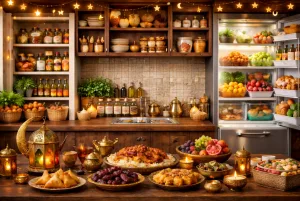
Use airtight containers or transparent containers where possible so you can quickly see what you have. Add simple labels (name + date if useful), especially for flours, grains, and pre-mixed ingredients.
This improves:
- shopping accuracy (less overspending),
- meal planning speed,
- and the overall sense of calm in the pantry.
Cabinet setup for faster cooking
Your cabinets should support your cooking flow, not fight it.
Try organizing by task:
- Prep cabinet/drawer: mixing bowls, measuring cups, peelers, graters.
- Cooking zone: pots, pans, utensils, oils, common spices.
- Serving zone: trays, serving spoons, ladles, tableware.
- Drinks zone: mugs, glasses, tea, coffee, kettle accessories.
If space is limited, simple tools like drawer dividers, shelf risers, or rotating organizers can make a big difference.
The goal is not “Pinterest-perfect cabinets.” The goal is fewer steps and less searching when you’re preparing food close to iftar time.
Fridge and freezer setup for Iftar and Suhoor prep
A well-organized fridge/freezer is essential for ramadan meal prep kitchen routines.
Practical ideas:
- Store portioned proteins (marinated chicken, minced meat, fish) in labeled containers.
- Keep a shelf for prepared ingredients (washed herbs, chopped vegetables, sauces).
- Create a visible area for suhoor-friendly items (yogurt, eggs, fruit, overnight oats ingredients).
- Dedicate one shelf/bin for leftovers to avoid losing track.
- Freeze soups, stews, and sauces in meal-size portions.
For food safety, refrigerate perishable leftovers within 2 hours (or sooner in hot conditions). USDA food safety guidance specifically highlights this “2-hour rule.”
Create Smart Kitchen Zones for Ramadan (Prep, Drinks, Serving)
The Ramadan prep station (Iftar + Suhoor essentials)
One of the best Ramadan kitchen storage ideas is not just “where things go,” but how your kitchen is zoned.
Create a small prep station (even a tray on the counter works) with:
- cutting board,
- knife,
- mixing bowl,
- frequently used utensils,
- napkins/paper towels,
- dates,
- a serving plate or tray.
This station becomes your fast-action area before iftar and reduces unnecessary movement across the kitchen.
For suhoor, consider a simplified “quiet prep” version:
- kettle access,
- mugs,
- oats/tea/coffee,
- bowls/spoons,
- water bottles.
Beverage corner for hydration and Ramadan drinks
Hydration is easier when drinks are visible and ready.
Set up a beverage station / drink corner with:
- water jug or bottles,
- glasses or cups,
- herbal teas,
- tea/coffee tools,
- a tray for Ramadan drinks (for example, tamarind or hibiscus/karkadeh where culturally relevant).
As a general baseline, UK guidance commonly advises aiming for about 6–8 cups or glasses of fluids per day, with needs increasing in heat or with more activity.
A visible hydration corner turns “I should drink more water” into an easier routine between iftar and suhoor.
Serving and guest-ready setup
If you host iftar — even occasionally — create a serving flow in advance.
A few high-impact ideas:
- Use oven-to-table serving where possible to reduce dish transfers.
- Pre-select serving trays and serving spoons.
- Decide whether you’ll do buffet-style iftar or table service.
- Keep tableware grouped and accessible.
- Set a temporary “landing zone” for finished dishes before serving.
This is what makes a kitchen feel guest-ready and reduces last-minute chaos.
Meal Planning That Protects Your Energy (Not Just Your Schedule)
Build a realistic weekly Ramadan meal plan
A good Ramadan kitchen checklist should include meal planning, not just cleaning and storage.
Instead of planning 30 completely different meals, build a realistic weekly rhythm:
- 2–3 rotating suhoor options
- 4–5 core iftar meals
- 1–2 soup/salad options
- 1 planned leftovers night
This reduces decision fatigue and helps with shopping, prep, and budgeting.

A practical framework:
- Suhoor: protein + fiber + healthy fats + fluid-rich foods
- Iftar start: dates + water + soup/light starter
- Main meal: protein + vegetables + complex carbs + healthy fats
Batch cooking and freezer prep that actually works
Batch cooking is useful — but only if it’s realistic.
Good batch-prep candidates:
- soups and broths,
- stews/curries,
- sauces,
- marinated proteins,
- chopped onions or aromatics,
- freezer-friendly pastries/snacks (if part of your routine),
- cooked grains.
What makes batch prep effective:
- Portion it.
- Label it (name + date).
- Freeze/refrigerate based on when you’ll use it.
- Prep things you actually eat, not idealized meals.
This protects your time and reduces food waste.
A simple shopping strategy (list, bulk, budget)
A smart shopping plan supports your Ramadan kitchen essentials and prevents overbuying.
Use a list in categories:
- pantry staples
- fresh produce
- proteins
- dairy/alternatives
- freezer items
- drinks
- serving/hosting supplies
Buy in bulk selectively (items you know you’ll use), not emotionally. A pantry full of “just in case” items often creates clutter and wasted spend.
If budget is tight, prioritize:
- Staples
- Storage basics (containers/labels)
- One or two time-saving tools
- Simple decor touches (not a full makeover)
Time-Saving Tools and Kitchen Essentials (What’s Worth It)
High-impact appliances for Ramadan cooking
Not every kitchen needs every gadget. But some appliances can dramatically reduce time and fatigue during Ramadan.
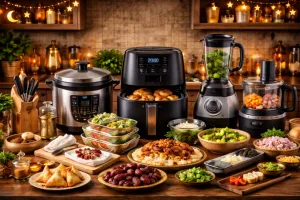
Common high-impact tools include:
- Blender (soups, smoothies, sauces)
- Food processor (chopping, slicing, doughs)
- Pressure cooker (faster legumes, stews, meats)
- Slow cooker (hands-off meals)
- Air fryer (quick reheating and lighter cooking)
- Microwave (reheating, defrosting support)
- Dishwasher (if available — a huge cleanup saver)
When choosing what’s “worth it,” ask:
- Does it save prep time?
- Does it reduce cleanup?
- Will I use it weekly?
- Does it help with my typical Ramadan menu?
Must-have vs nice-to-have kitchen essentials
This distinction matters because it helps readers make confident decisions.
Must-have (for most homes):
- sharp knife + cutting board
- 1–2 reliable pots
- non-stick or heavy-use pan
- storage containers (airtight/stackable)
- serving tray/platter
- ladle/serving spoons
- labels or marker tape
Nice-to-have (depends on budget/space):
- stand mixer
- extra decorative serveware
- specialty appliances
- duplicate cookware “just for guests”
This keeps the kitchen functional and clutter-free.
Before-Ramadan appliance check and maintenance
Before Ramadan starts, test and clean the tools you rely on:
- blender blades,
- pressure cooker seal,
- microwave function,
- oven temperature reliability,
- fridge and freezer cooling.
This simple step can prevent breakdowns during busy evenings.
How to Make the Kitchen Feel Warm, Cozy, and Welcoming for Ramadan
Layered lighting for warmth (without a full makeover)
If your goal is a warm kitchen for Ramadan, lighting usually matters more than decor.
Use two types of light:
- Task lighting for prep (clear, practical visibility)
- Ambient warm lighting for atmosphere (especially near iftar time)
Simple upgrades:
- warm bulbs (where suitable),
- under-cabinet lighting,
- a small lamp near a dining/prep corner (if safe and practical),
- lantern-style accents for evening ambiance.
The result is a kitchen that feels cozy and inviting without losing function.
Decor that adds warmth without clutter
The best cozy Ramadan kitchen decor is intentional, not crowded.
Choose a few touches that fit your space:
- lanterns / fawanees,
- crescent or star accents,
- a seasonal tray centerpiece,
- fresh flowers or greenery,
- coordinated napkins or textiles,
- Ramadan-themed tableware (used selectively).
Keep countertops mostly clear. A “welcoming” kitchen feels easier to move through, not visually overloaded.
This is where many Ramadan kitchen ideas go wrong: too much decor can make a working kitchen feel smaller and harder to clean.
Sensory comfort: scent, sound, and calm routines
“Welcoming” is also sensory.
Consider:
- pleasant cooking aromas (soups, spices, fresh bread, tea),
- good ventilation (so the kitchen feels fresh, not heavy),
- a calm sound environment (whatever fits your household routine),
- a quick pre-iftar reset habit (wipe counters, set dates/water, prepare serving tools).
These small rituals make the space feel emotionally warm — not just visually decorated.
Small kitchen? Budget-friendly ways to create a cozy Ramadan feel
You do not need a large kitchen to create a Ramadan-friendly kitchen layout.
Try these small-space upgrades:
- use vertical storage (shelf risers, hooks, stackable containers),
- create zones using trays (prep tray, drinks tray, serving tray),
- clear one countertop area completely,
- use one or two decor accents only,
- coordinate practical items (containers, towels, trays) for a calmer look,
- add warmth with lighting and textiles instead of bulky objects.
These are often the highest-value upgrades because they improve both function and atmosphere.
Healthy, Hydrating, and Easy: Designing a Kitchen That Supports Better Ramadan Meals
Suhoor setup for sustained energy
Suhoor is easier when your kitchen supports quick, low-friction choices.
Keep a visible, easy-access group of ingredients for suhoor:
- oats or whole grains,
- eggs or yogurt,
- nuts/seeds,
- fruit,
- water bottles,
- tea essentials.
A setup like this helps you make steady-energy choices even when you’re tired in the early morning.
Iftar flow for comfort and digestion
A calmer iftar often starts with setup, not cooking skill.
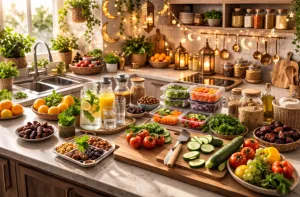
Practical iftar and suhoor kitchen preparation tips:
- pre-set dates and water,
- stage soup/salad bowls before serving,
- keep serving utensils ready,
- avoid stacking too many last-minute tasks at mealtime.
Many people also find that beginning with water and dates, then easing into lighter foods before the main meal, helps create a more comfortable iftar rhythm.
Hydration station habits between fasting hours
A hydration plan is easier to follow when your kitchen environment supports it.
Helpful habits:
- refill a pitcher after iftar,
- keep cups visible and easy to grab,
- rotate in herbal teas or fluid-rich options,
- prep fruit for quick hydration support,
- set a “before bed” water routine.
The kitchen setup itself can make healthy habits feel more automatic.
Family, Guests, and Generosity: Making Your Kitchen Welcoming Beyond the Aesthetics
Involve the family to reduce stress and build connection
A truly welcoming kitchen for Ramadan is one where the work is shared when possible.
Examples of family roles:
- children: set napkins, place dates, fill water glasses
- teens: help with chopping, drinks station, table setup
- adults: cooking, final seasoning, serving flow, cleanup rotation
This reduces stress and turns prep into a shared rhythm instead of one person carrying everything.
Hosting Iftar without kitchen chaos
If you’re preparing your home kitchen for iftar guests, the biggest win is planning the flow.
Use a simple hosting plan:
- Decide the menu 2–3 days ahead.
- Batch-prep what can be done early.
- Set serving dishes the night before.
- Create a drinks station guests can access easily.
- Keep one clear countertop for final plating.
- Simplify cleanup (soaking pots, leftovers containers ready, quick reset routine).
This makes your kitchen feel warm and generous because it works smoothly.
A charity corner or giving shelf (optional but meaningful)
For some households, part of creating a warm and welcoming kitchen for Ramadan is connecting food preparation with generosity.
A simple idea:
- dedicate one shelf, basket, or pantry bin for donation items,
- prepare extra portions intentionally for sharing,
- keep it visible as part of your Ramadan routine.
This adds meaning to the space and reinforces the values of compassion and gratitude many families want their home to reflect.
Food Safety, Leftovers, and Waste Reduction During Ramadan
Safe handling and storage basics for busy kitchens
Busy kitchens can become risky kitchens if food sits out too long or is stored inconsistently.
Core food safety reminders:
- refrigerate perishable foods and leftovers promptly (generally within 2 hours; 1 hour if the environment is very hot),
- cool large portions in shallow containers for faster chilling,
- avoid thawing meat at room temperature,
- label leftovers so they’re used in time.
These habits are especially important during Ramadan when larger quantities are cooked and served.
Smart leftovers and repurposing ideas
Leftovers are not a failure — they’re part of a good system.
Ways to repurpose:
- roast chicken → wraps or grain bowls
- soup → next-day light iftar starter
- cooked rice → quick stir-fry or side
- grilled vegetables → omelet or sandwich filling for suhoor
The key is visibility and timing:
- store leftovers in clear containers,
- label dates,
- keep them in one designated zone.
Reduce overcooking and overshopping
To reduce food waste during Ramadan:
- repeat core meals (rotation is efficient),
- cook for the number of people actually attending,
- shop from an inventory list,
- schedule a leftovers meal,
- freeze extras early instead of “hoping” they get used.
This supports your budget, your time, and a more intentional Ramadan home routine.
Your Ramadan Kitchen Checklist (Printable-Friendly Summary)
2–4 weeks before Ramadan
- Deep clean kitchen surfaces, cabinets, pantry, fridge/freezer
- Declutter tools and cookware
- Check expiry dates and pantry inventory
- Test/clean key appliances
- Create a basic meal planning system
- Make a shopping list (staples + hosting needs)
- Decide what to organize by zone (prep / drinks / serving)
1 week before Ramadan
- Refill pantry staples (dates, grains, lentils, spices, chickpeas, nuts, drinks)
- Portion and label freezer prep items
- Set up suhoor and iftar prep essentials
- Organize containers and leftovers shelf
- Add simple warm decor (lanterns, textiles, tray, flowers)
- Finalize hosting flow (if expecting guests)
- Assign family roles
Daily / Weekly maintenance during Ramadan
- 10-minute counter reset after meals
- Refill hydration station
- Check leftovers and label dates
- Restock prep station essentials
- Review meal plan and shopping list once a week
- Keep one surface clear for calm, flexible prep
Final Thoughts: A Ramadan Kitchen That Feels Peaceful, Practical, and Full of Barakah
The best Ramadan kitchen is not the most expensive, the most decorated, or the most “perfect.”
It’s the one that helps your home feel:
- calmer before iftar,
- easier at suhoor,
- more welcoming to guests,
- and more supportive of your energy, time, and intentions.
If you focus on function first, then add warmth through lighting, decor, and routines, you’ll create a kitchen that is not only Ramadan-ready — but genuinely comforting to live in.
And that’s what a truly warm and welcoming kitchen for Ramadan is meant to do.